GDPR III, Rights of the data subject
In this chapter, the GDPR sets out individuals' rights regarding the management of their personal data by third parties.
Chapter III, Article 17, Head 1
Right to erasure (right to be forgotten), Head 1: “The data subject shall have the right to obtain from the controller the erasure of personal data concerning him or her without undue delay, and the controller shall have the obligation to erase personal data without undue delay.”
The Wazuh FIM module helps meet this requirement. It monitors the files and folders that contain personal data, and it generates a finding when a modification or deletion occurs. A file deletion finding shows that the personal data of an individual was deleted in response to their request. Erasure requests also cover copies held elsewhere.
Use case: Detect file deletion
In this use case, you configure the Wazuh agent on an Ubuntu 24.04 endpoint to detect file deletion in the /root/personal_data directory. You then delete a file to trigger a finding.
Ubuntu endpoint
Switch to the
rootuser:$ sudo su
Create the directory
personal_datain the/rootdirectory:# mkdir /root/personal_data
Create the file
subject_data.txtin the/root/personal_datadirectory and include some content:# touch /root/personal_data/subject_data.txt # echo "User01= user03_ID" >> /root/personal_data/subject_data.txt
Add the highlighted configuration to the
<syscheck>block of the Wazuh agent configuration file/var/ossec/etc/ossec.conf:<syscheck> <directories check_all="yes" realtime="yes">/root/personal_data</directories> </syscheck>
Restart the Wazuh agent to apply the changes:
# systemctl restart wazuh-agent
Delete the file
subject_data.txt:# rm /root/personal_data/subject_data.txt
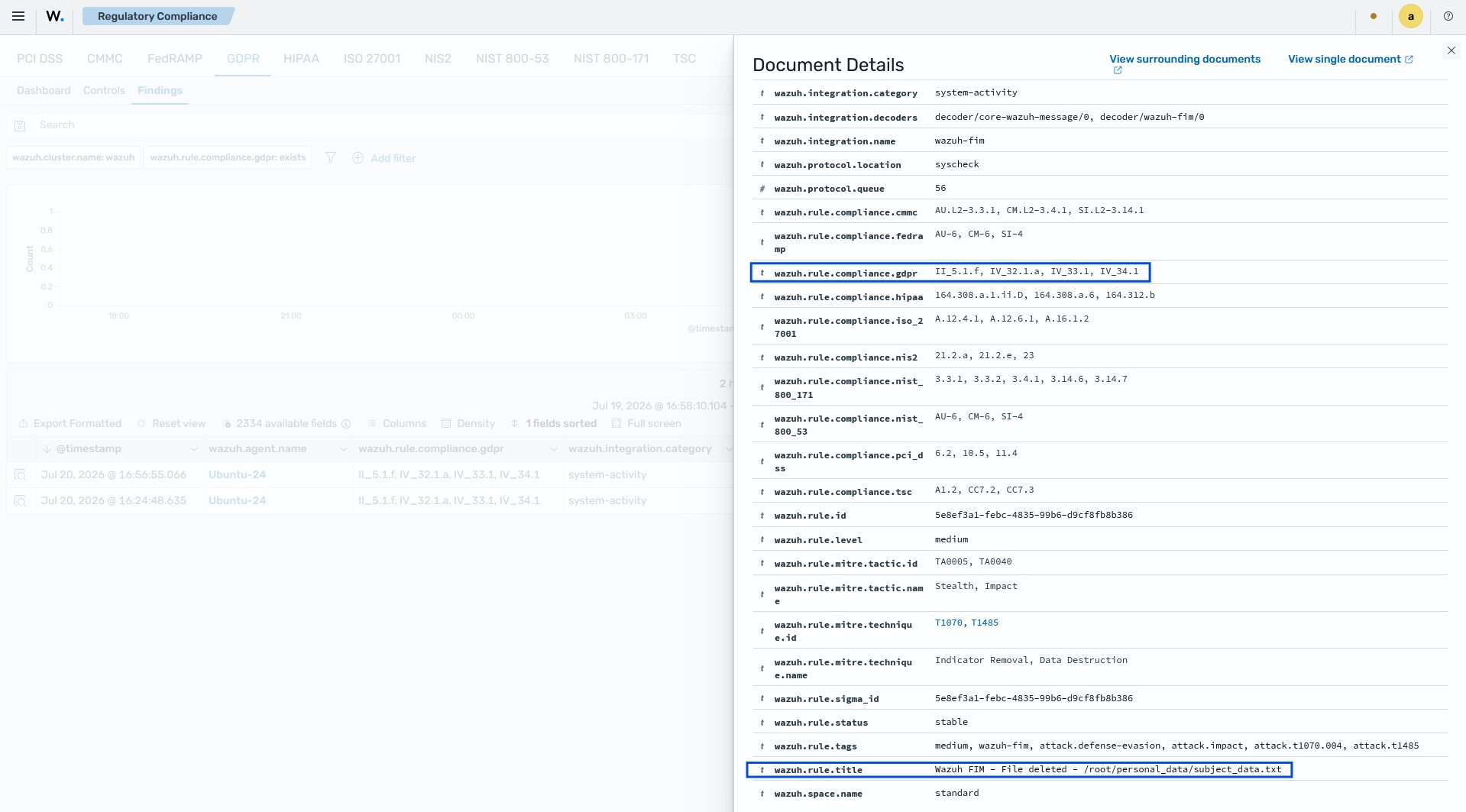
On the Wazuh dashboard, a finding shows that the subject_data.txt file was deleted.
Chapter III, Article 18, Head 2
Right to restriction of processing, Head 2: “Where processing has been restricted under paragraph 1, such personal data shall, with the exception of storage, only be processed with the data subject's consent or for the establishment, exercise or defence of legal claims or for the protection of the rights of another natural or legal person or for reasons of important public interest of the Union or of a Member State.”
This article requires that when an individual requests a temporary restriction on processing their personal data, no one accesses that data without explicit consent.
With the FIM module and the Wazuh dashboard, you can perform searches to confirm that no user data is modified or deleted during the specified restriction period.
Use case: Search for FIM events within a certain time frame
On the Wazuh dashboard, check Threat intelligence > Threat Hunting > findings to confirm that no modification or deletion of restricted data occurred during a specific time interval. The GDPR dashboard also shows this information.
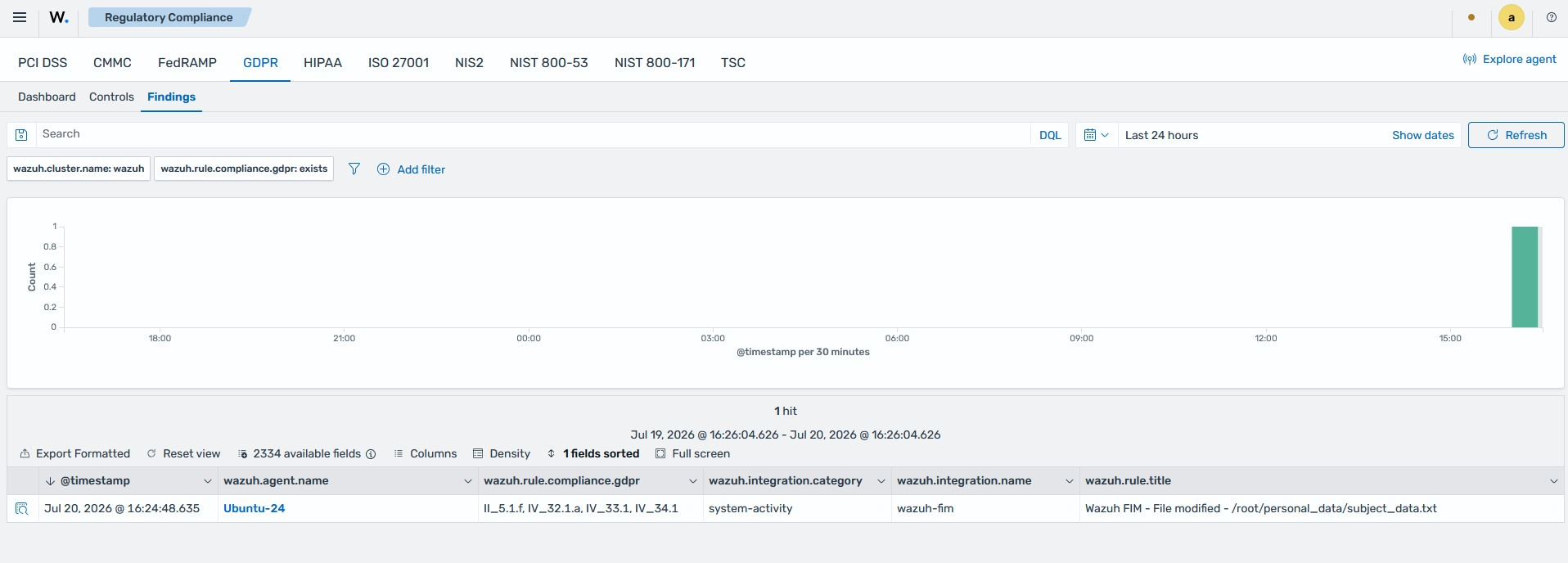
You can see a finding from the previous use case.